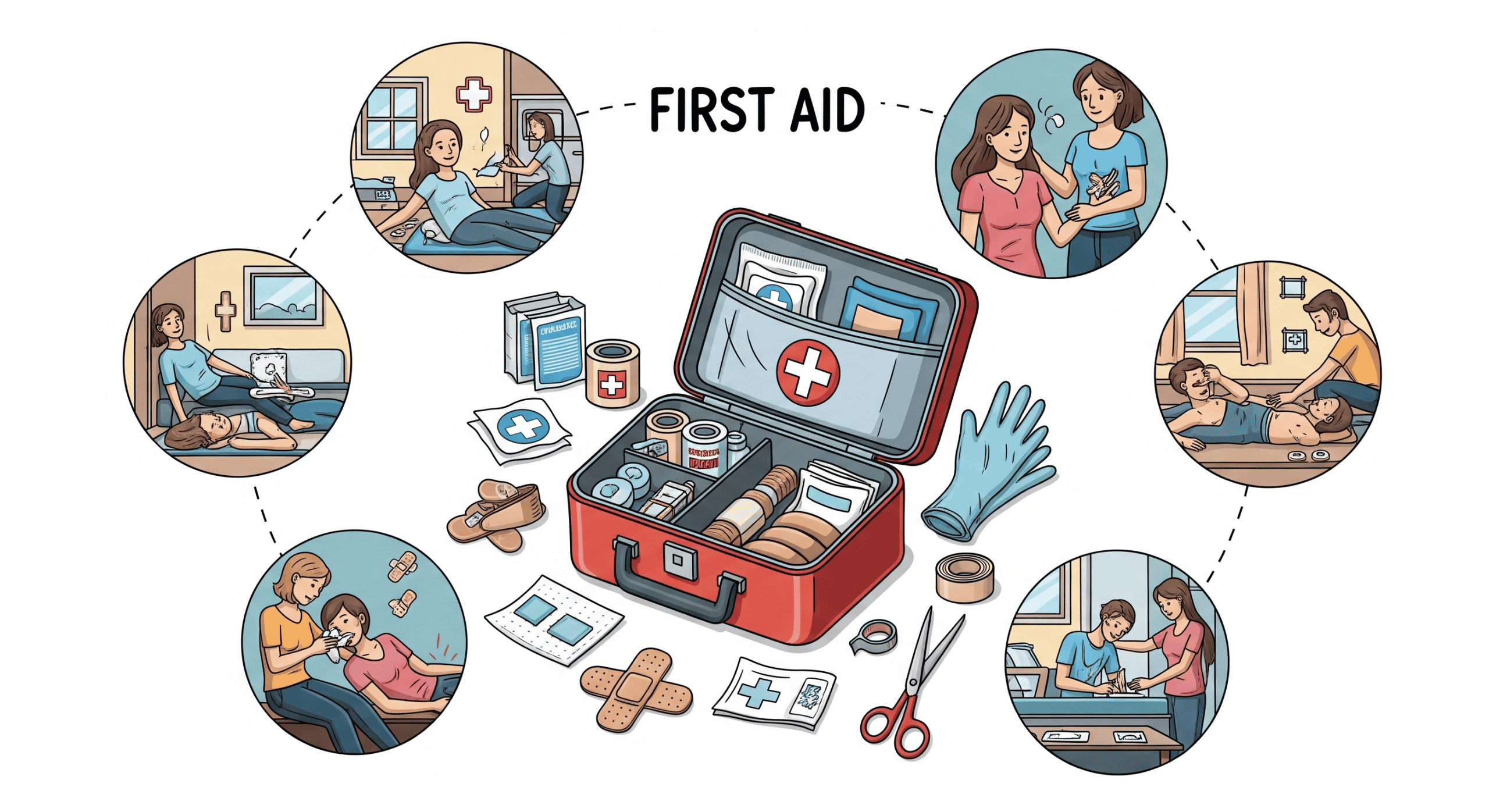
In our fast-paced world, accidents and unexpected health issues can happen anytime and anywhere. Whether at home, school, work, or in public places, emergencies can arise without warning. This is why the importance of first aid in our daily life cannot be overstated. First aid is not only about medical knowledge; it is about being prepared, confident, and capable of offering immediate help before professional care arrives.
First aid refers to the immediate care given to an injured or ill person until proper medical treatment can be accessed. It can mean the difference between life and death in critical situations. For example, knowing how to stop bleeding, manage burns, or perform CPR can save a life while waiting for an ambulance. These simple actions can prevent conditions from worsening and offer relief to those in pain.
One of the most important aspects of first aid in daily life is safety at home. Many household accidents, such as cuts, burns, or falls, can be managed quickly if someone knows basic first aid. For instance, treating a small burn with cool water immediately can prevent it from becoming severe. Similarly, knowing how to respond to choking incidents, especially in children, is an invaluable skill that every family member should learn.
At workplaces, first aid plays a vital role in ensuring employee safety. Many companies now provide first aid training to their staff so that they are prepared to handle emergencies. Workplace accidents such as slips, falls, or sudden health issues like heart attacks can be managed effectively if someone trained in first aid is available. This not only reduces panic but also creates a sense of security among employees.
Schools and educational institutions also emphasize the importance of first aid in our daily life. Teachers and students who have basic training can respond quickly to accidents in classrooms or playgrounds. Children are often more vulnerable to injuries, and having immediate assistance available makes a big difference in their recovery and safety.
Beyond just handling emergencies, first aid also promotes a sense of responsibility and care for others. When people learn first aid, they become more aware of safety in their surroundings. They take proactive steps to prevent accidents and handle situations calmly when they occur. This contributes to building a safer and more supportive community.
Learning first aid is not complicated. Many organizations and medical institutions offer training sessions that teach simple but effective techniques. The investment of time and effort in learning these skills pays off significantly when emergencies strike. Everyone, regardless of age or profession, can benefit from this knowledge.
In conclusion, the importance of first aid in our daily life is undeniable. It equips us with the ability to act quickly, reduces the severity of injuries, and in many cases, saves lives. By learning and practicing first aid, we not only protect ourselves but also show care and compassion for others. It is a skill that transforms ordinary people into everyday heroes, ready to face life’s uncertainties with confidence.