Public speaking has always been a powerful tool for raising awareness, breaking stigma, and inspiring change. When it comes to the subject of mental health, having a well-prepared public speaking script can make the difference between a message that resonates and one that is quickly forgotten. Mental health is not only a personal matter but also a global concern, and addressing it in front of an audience requires sensitivity, clarity, and authenticity.
A strong public speaking script about mental health should begin with a personal touch. Starting with a story, either from your own experiences or from someone who has given you permission to share theirs, immediately captures attention. Audiences connect with real-life challenges more than abstract statistics. For example, rather than opening with numbers about depression rates, you might begin by saying, “Imagine waking up every day feeling like you are running a marathon before you even step out of bed.” This invites empathy and curiosity.
After a personal introduction, it is important to provide context and useful information. A script should balance emotion with education. You might include key definitions about mental health, such as the difference between mental illness and overall mental well-being, or highlight common misconceptions. For instance, many people still believe that mental health struggles are a sign of weakness, when in reality they can affect anyone regardless of age, background, or profession. By addressing these misunderstandings, your speech becomes both informative and transformative.
Equally important is offering practical guidance. A script about mental health should not only describe challenges but also share resources, coping strategies, and messages of hope. For example, you might outline simple steps like practicing mindfulness, seeking therapy, or supporting a friend who shows signs of distress. Giving the audience something actionable makes the message more impactful.
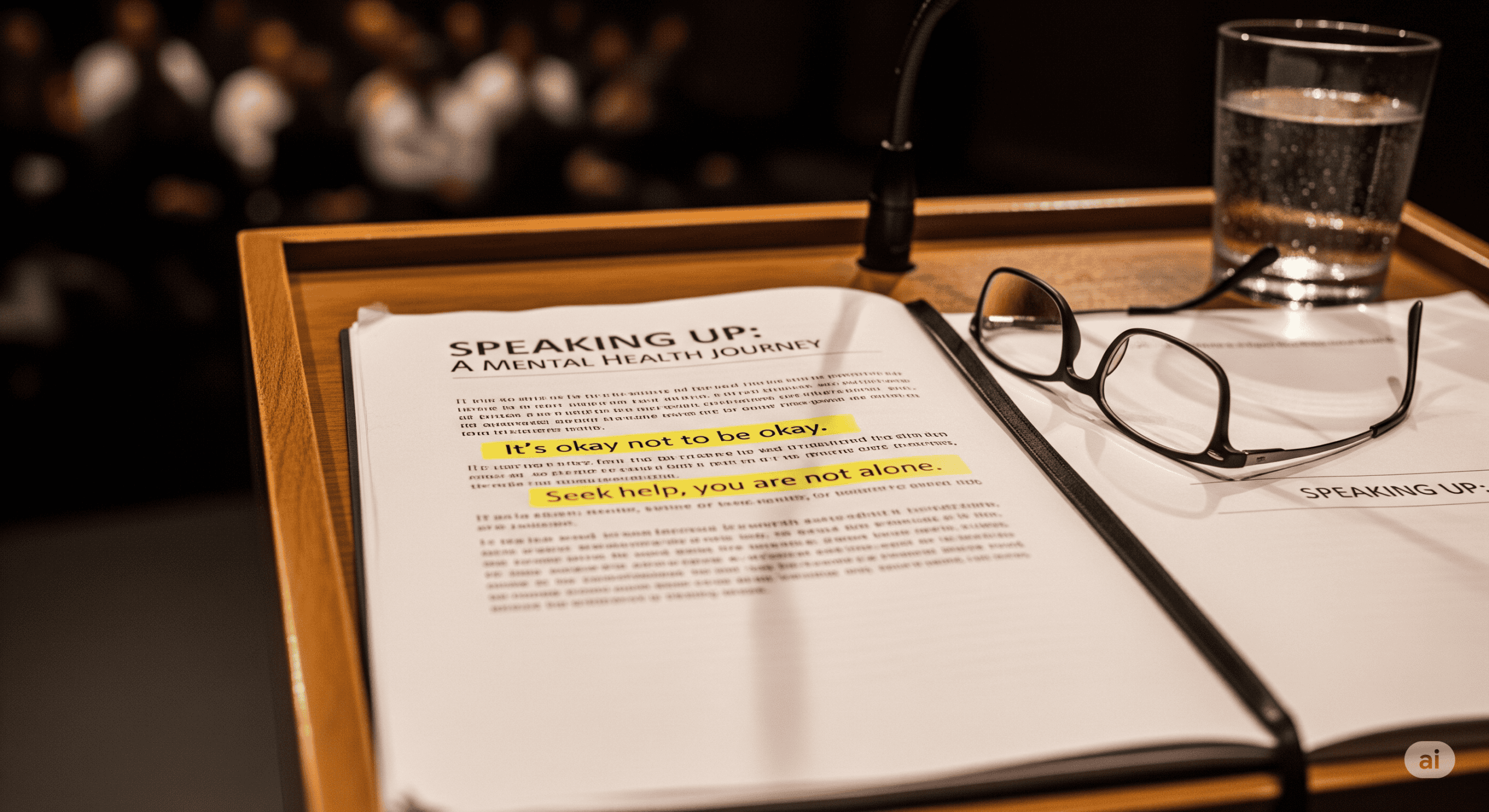
Tone also plays a significant role in delivering a mental health speech. Your public speaking script should strike a balance between compassion and empowerment. Avoid language that dramatizes or trivializes the subject. Instead, use words that normalize conversation and encourage openness. Phrases like “It’s okay to not be okay” or “Seeking help is a sign of strength” can be woven into the script to leave lasting impressions.
Another effective technique is to include moments of pause. Silence, when used intentionally, allows listeners to reflect on what has been said. In a topic as sensitive as mental health, these pauses can give weight to your words and create space for emotional connection.
Finally, end your speech with a call to action. Whether it’s encouraging the audience to check in on a loved one, to prioritize self-care, or to advocate for better mental health resources, your conclusion should inspire positive steps forward. The closing lines of your script are the words people are most likely to remember, so they should carry a message of hope, unity, and resilience.
In conclusion, preparing a public speaking script about mental health requires careful thought, empathy, and a clear structure. By combining storytelling, education, practical advice, and a hopeful message, you can deliver a speech that not only raises awareness but also sparks real change.